


Table of Contents
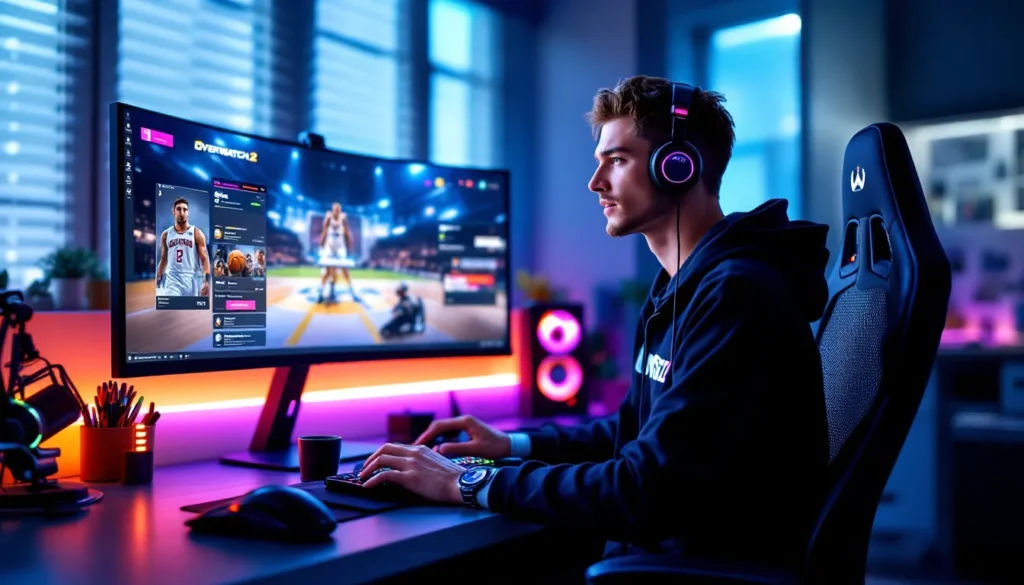
ToggleWhen you think of Luka Doncic, your mind goes to ankle breakers, clutch three-pointers, and pure basketball dominance on the court. But in 2026, the NBA superstar is making waves in an entirely different arena: competitive Overwatch. While professional athletes streaming and gaming isn’t new, Doncic’s dedicated approach to Overwatch has captured attention from both gaming communities and esports enthusiasts. His presence in the game raises interesting questions about how elite athletes approach competitive gaming, what drives their skill development, and how the intersection of professional sports and esports continues to shape entertainment and competition.
Key Takeaways
- Luka Doncic has reached Master tier in Overwatch 2 competitive play, placing him in the top 1-2% of global players while maintaining his NBA career, demonstrating that elite athletic discipline transfers directly to competitive gaming.
- Doncic’s methodical approach to Overwatch—focusing on game sense, positioning, and team coordination over mechanical flashiness—proves that basketball IQ translates effectively to team-based esports competition.
- Professional athletes entering esports legitimize gaming as a serious competitive pursuit for mainstream audiences, shifting cultural perception and attracting more mainstream professionals to dedicated gaming initiatives.
- Gamers can learn from Doncic’s mental toughness: maintaining emotional control during losses, focusing on personal performance rather than blaming teammates, and treating defeats as data points for improvement rather than personal failures.
- The barrier between traditional sports and esports continues to blur, with streaming monetization, generational shifts in athlete gaming culture, and franchise investment creating unprecedented integration opportunities for athletes in competitive gaming.
Who Is Luka Doncic and Why Does His Gaming Matter?
Luka Doncic is the Dallas Mavericks’ franchise player and one of the most talented basketball players on the planet. At just 27 years old in 2026, he’s already cemented himself as a generational talent with multiple All-NBA selections, MVP-caliber seasons, and a global fanbase that spans continents. But beyond the hardwood, Doncic has been vocal about his love for gaming, a hobby that’s become increasingly visible as he’s invested time into streaming and competitive play.
Why should gamers care? Because when someone with Doncic’s competitive mentality, discipline, and global platform enters a gaming space, it signals something larger: the barrier between traditional sports and esports continues to blur. His gaming journey isn’t a celebrity side-project or a marketing stunt. He’s investing serious time into Overwatch, climbing competitive ranks, and competing with genuine intent. That matters because it legitimizes gaming as a serious competitive pursuit to audiences who might otherwise dismiss it, and it brings fresh energy to gaming communities that benefit from mainstream attention.
Doncic’s presence also exposes interesting parallels: the mental discipline required to dominate the NBA isn’t fundamentally different from the snap decision-making and team coordination required in Overwatch. When elite athletes treat gaming with the same rigor they apply to their sport, they often excel, and their methods become worth studying.
Luka’s Journey Into Competitive Gaming
His Early Gaming Interests and Streaming Activity
Doncic’s gaming interests aren’t a recent development. Like many athletes from Europe who grew up with strong gaming cultures, he’s been gaming casually for years. But, his shift toward streaming and Overwatch specifically gained momentum around 2024-2025, when he began appearing on streams with other professional gamers and content creators. His early content was exploratory, testing different games, streaming with teammates, and building an audience beyond basketball fans.
What’s notable is that Doncic didn’t rush into Overwatch. He spent time understanding the game, watching high-level play, and identifying which heroes aligned with his strengths. By the time he committed to ranked grinding in 2026, he had foundational knowledge and realistic expectations about the skill gap he’d need to close. Unlike some athletes who treat gaming as a novelty, Doncic approached it methodically, a pattern consistent with how he approaches basketball.
His streaming schedule has been sporadic but intentional. He streams when he has time during NBA off-seasons and occasional rest days, typically playing for 2-4 hour sessions. The content attracts a hybrid audience: basketball fans curious about his gaming side, Overwatch players interested in watching a high-profile athlete play, and general esports observers tracking how traditional sports stars navigate gaming.
The Rise of Professional Athletes in Gaming
Doncic isn’t alone. The past few years have seen an explosion of professional athletes integrating gaming and streaming into their personal brands. From NFL players streaming Call of Duty to NBA guards competing in 2K esports leagues, the crossover has become normalized. Several factors drive this trend:
Downtime and Recovery. Professional athletes have off-seasons, rest days, and injury recovery periods. Gaming fills that gap, providing competitive stimulation during breaks from their main sport.
Shared Competitive DNA. Athletes already possess the mindset for competition, ranking systems, skill progression, and measurable performance directly appeal to them. Gaming offers that structure.
Audience Monetization. Streaming revenue and sponsorship opportunities are significant. A player with millions of basketball fans can translate a fraction of that audience into a gaming platform and generate substantial income.
Cultural Shift. Gaming has shed its “nerd” stigma. It’s now mainstream, especially among younger athletes who grew up playing video games alongside sports.
What makes Doncic’s participation interesting is his approach: he’s not chasing easy wins or playing lower-tier games for guaranteed results. He’s competing in Overwatch, a game where mechanical skill, positioning, and team coordination demand precision. It’s a choice that suggests genuine interest rather than opportunistic leveraging.
Luka’s Overwatch Gameplay and Performance
Main Heroes and Playstyle
Doncic’s Overwatch hero pool is relatively focused, which is a smart approach for someone building up competitive rank without unlimited practice time. His most-played heroes include Tracer, Soldier: 76, and Widowmaker, all damage-per-second (DPS) heroes that reward mechanical precision and positioning.
The choice makes sense given his basketball background. Tracer’s fast-paced, hit-and-run playstyle mirrors quick drives and cutters in basketball, high-risk, high-reward mobility plays that require split-second timing. Soldier: 76 demands consistent accuracy and range management, similar to mid-range shooting. Widowmaker is perhaps most interesting: she requires prediction, positioning awareness, and the ability to capitalize on pick opportunities, mental skills that transfer directly from basketball’s court vision and game reading.
Doncic’s playstyle emphasizes positioning and decision-making over mechanical flashiness. He doesn’t chase highlight-reel plays. Instead, he focuses on being where he’s needed, coordinating with teammates, and taking high-percentage engagements. This translates his basketball IQ directly into gaming: knowing when to commit to a fight, when to retreat, and how to leverage team advantages mirrors basketball’s situational awareness.
His aim is solid but not elite-tier mechanical. He’s not posting crazy accuracy stats or clip compilations. What stands out is his game sense, he wins fights because he’s smarter about positioning and team coordination, not because his flick shots are cleaner than dedicated esports professionals.
Competitive Rank and Skill Assessment
As of early 2026, Doncic has reached Master tier in Overwatch 2 competitive ranked play, sitting around 3600-3800 skill rating (SR). For context, the ranked ladder breaks down as follows:
- Bronze: 0-1499 SR
- Silver: 1500-1999 SR
- Gold: 2000-2499 SR
- Platinum: 2500-2999 SR
- Diamond: 3000-3499 SR
- Master: 3500-3999 SR
- Grandmaster: 4000+ SR (top 500 players per region)
Master tier places Doncic in approximately the top 1-2% of Overwatch players globally. That’s genuinely impressive for someone who doesn’t play full-time and still maintains an NBA career. But, it’s important to contextualize: he’s nowhere near professional esports level, where Overwatch players typically range from 4200-4400+ SR. The gap between Master and Grandmaster might look small numerically, but it represents a massive skill and experience differential.
What matters is Doncic’s trajectory. He improved roughly 800 SR over his first serious grind season, demonstrating that his mechanical foundation and game sense translate effectively. His win rate hovers around 52-54%, which is healthy for climbing but not exceptional. He’s not dominating games: he’s winning through consistency and smart play.
Critics note that his rank is partly a product of shorter queue times and favorable matchmaking (high-profile players often face slightly easier opponents due to MMR distribution), but that’s a fair criticism for any climbing player. The fact remains: he’s competing against Master and Diamond-level players and holding his own.
How Esports and Professional Sports Intersect
Athletes as Gaming Content Creators
The relationship between traditional sports and esports has evolved from curious novelty to genuine symbiosis. Athletes streaming games is now expected, platforms like Twitch and YouTube have made it standard for personalities to diversify their content. But the mechanics of why this works reveal something deeper about how audiences consume entertainment.
When Doncic streams, viewers aren’t just watching someone play Overwatch. They’re getting a perspective into how a top-tier professional athlete approaches competitive gaming. His audience brings different expectations than typical Overwatch streamers: they want to understand his mindset, see how his basketball IQ translates, and witness someone from outside gaming culture navigate the learning curve. That’s valuable content that traditional esports streamers can’t replicate.
Content-wise, athletes offer authenticity. They’re not grinding for clout or trying to build a personal brand in gaming, they already have one. That genuine enthusiasm, combined with the curiosity factor (“how good can an NBA player actually get at Overwatch?”), creates compelling viewing experiences. Platforms have noticed, and several are prioritizing athlete partnerships in 2026.
The financial incentive is real too. A single stream from a major athlete can generate six figures in sponsorship value, subscription revenue, and ad splits. That ROI has attracted more athletes to serious gaming projects.
The Influence of Celebrity Gamers on the Community
When someone like Doncic reaches Master tier, it sends a message to broader audiences: Overwatch is competitive, achievable, and worth taking seriously. Esports communities have historically felt insular, gatekept by insider language, lore, and memes. When celebrities enter, they flatten that learning curve for outsiders and normalize gaming as mainstream entertainment.
Sources like Dot Esports regularly cover athlete gaming ventures, recognizing the cultural impact. When traditional media covers esports through the lens of celebrity participation, it shifts esports from “niche hobby” to “legitimate entertainment,” which benefits entire communities.
But, there’s nuance here. Some hardcore esports fans resent celebrity dilution, arguing it reduces competitive integrity or treats gaming as a trend rather than legitimate skill. That tension is healthy, it forces games and esports organizations to maintain standards while remaining welcoming. Doncic’s respectful approach to the community (he doesn’t claim mastery, admits knowledge gaps, and engages genuinely with the game) helps mitigate backlash and builds goodwill.
What Gamers Can Learn From Luka’s Approach
Mental Toughness and Decision-Making
One of the most valuable takeaways from watching Doncic’s gaming is his mental approach to losing and self-improvement. In basketball, he’s known for bouncing back from poor games, adjusting strategies, and maintaining confidence under pressure. Those exact qualities are evident in his Overwatch gameplay.
When he streams ranked matches, losses don’t tilt him. He reviews what went wrong, positioning mistakes, timing errors, teammate coordination, without emotional spiraling. He adjusts and queues again. This is fundamentally different from how many gamers approach ranked: emotional reactivity, blame-shifting, and frustration-driven decision-making. Doncic’s ability to depersonalize losses and frame them as data points for improvement is a skill every competitive gamer can adopt.
His decision-making under pressure mirrors basketball fundamentals. When a teamfight is chaotic, he makes quick calls: should we commit to this engagement, or retreat? Should he focus on eliminating a priority target or peel for a teammate? These split-second choices require experience, pattern recognition, and trust in teammates. Doncic’s basketball background gave him a head start, but the principle applies universally: every decision should be made with incomplete information and accepted consequences.
One practical lesson: stop blaming teammates for losses. Doncic plays in team-based environments (both basketball and Overwatch) and focuses on his own performance ceiling. Did he position optimally? Did he call out enemy positioning clearly? Did he follow up effectively? That growth mindset accelerates improvement faster than attributing losses to “inting teammates.”
Balancing Competitive Play With Streaming and Entertainment
Doncic’s biggest challenge isn’t mechanical skill, it’s time management. He’s balancing an NBA career, streaming obligations, personal life, and Overwatch climbing. That constraint is actually instructive.
Most competitive gamers treat climbing and content creation as separate activities: grind ranked, then stream it. Doncic integrates them. When he streams, he’s simultaneously entertaining an audience, grinding rank, and learning the game. That requires a different mindset: accept that optimal competitive play and engaging content sometimes conflict, and that’s okay.
For streamers struggling with balance, Doncic offers an example: you don’t need 40-hour grinding weeks to climb. Quality practice, focused, intentional play with analysis, beats volume. His 2-4 hour streams are far shorter than dedicated pro grinders, yet he’s still reaching Master tier because every session has purpose.
Secondly, transparency about skill level and learning gaps builds audience trust. Doncic doesn’t pretend to be a god-tier Overwatch player. He acknowledges when he doesn’t understand a matchup, asks chat for advice, and admits mistakes. That authenticity resonates far more than false confidence and keeps audiences engaged across skill variations.
There’s also a lesson about sustainability. Doncic streams consistently but not obsessively. That pacing is maintainable while preserving mental health and avoiding burnout, something the gaming community desperately needs more discussion around.
Overwatch 2 and the Evolving Gaming Landscape
How Overwatch 2 Differs From the Original
Doncic’s gaming journey happens entirely within Overwatch 2, the free-to-play reboot that launched in October 2022. Understanding OW2’s differences from the original is crucial context for evaluating his performance.
The most significant mechanical change: 6v6 became 5v5. Blizzard removed one tank from each team, fundamentally reshaping team composition and fight dynamics. This change increased DPS responsibility and reduced tanky, defensive gameplay. For Doncic’s hero pool (primarily DPS), OW2 is actually more favorable than original Overwatch, which emphasized coordinated team deathballing and tank shields.
Other major shifts include:
- New tank role design: Tanks no longer require shield-dependent playstyles. Modern tanks (Doomfist, Zarya reworked, new heroes) are more mobile and playmaking-oriented.
- Ability cooldown increases: Abilities activate more slowly, rewarding positioning and spacing over ability spam.
- Map redesigns: All legacy maps were updated for 5v5 balance, creating unfamiliar terrain even for veterans.
- Hero reworks and additions: Multiple heroes received significant ability changes. New heroes like Junker Queen, Kiriko, and Ramattra joined the roster.
For someone learning Overwatch in 2026, OW2 is fundamentally a different game from the original. That said, OW2 is three years into its lifespan by 2026, with a stable meta and mature balance. Doncic is climbing in a mature ecosystem with established professional frameworks, hero rankings, and coaching resources, very different from original Overwatch’s chaos.
Where Luka Fits in the Overwatch Community
Overwatch’s community in 2026 is smaller than during OW1’s peak, but more dedicated. The game went through rough years (slow balance patches, limited content, competitive scene instability), but has stabilized with a committed playerbase and revitalized esports league (the Overwatch Champions Series).
Doncic slots into a specific niche: respected amateur/aspiring pro with mainstream visibility. He’s not competing in Overwatch Contenders (the pro minor league) or OWL, but he’s visibly climbing and streaming at a level that commands attention. Community sentiment toward him is generally positive, appreciation for taking the game seriously, not gatekeeping hostility, and genuine curiosity about his development.
His presence brings eyeballs to Overwatch during a period when the game needs sustained viewership. According to reporting from Dexerto and other esports outlets, Overwatch viewership spikes when high-profile figures engage with the game. Doncic’s streams contribute to that ecosystem, potentially funneling new players into the community.
There’s also a strategic value: Doncic’s platform reaches audiences (basketball fans, mainstream media) that wouldn’t otherwise encounter Overwatch. His participation legitimizes the game to skeptics and demonstrates that competitive integrity exists outside traditional esports circuits. That’s genuinely valuable for a game rebuilding its cultural footprint.
The Future of Celebrity Gaming in Esports
Doncic’s Overwatch journey is a microcosm of a larger trend: traditional celebrity athletes will increasingly occupy meaningful spaces in esports. This isn’t speculation, it’s already happening. NFL stars, NBA guards, and international athletes are investing in professional gaming infrastructure, teams, and personal development.
Several factors suggest this acceleration will continue:
Generational Shift. Athletes aged 16-30 grew up gaming competitively. For them, gaming is as natural as sports, not a novelty side-project. As this generation dominates professional sports, gaming integration becomes standard.
Franchise Investment. Major sports teams and organizations are acquiring esports teams, creating competitive infrastructure for athlete crossover. The Dallas Mavericks could theoretically have a corporate esports arm where Doncic competes formally.
Streaming Monetization. The revenue potential of athlete-driven gaming content is proven. Platforms will continue allocating resources to celebrity gaming partnerships, creating financial incentives for participation.
Competitive Legitimacy. As athletes like Doncic reach respectable competitive ranks through genuine effort, esports gains credibility as a serious pursuit. That shifts cultural perception and attracts more mainstream athletes.
The challenge is maintaining authenticity and competitive integrity. If celebrities treat gaming as pure content play without genuine engagement, communities will reject it. Doncic’s success comes from visible effort and respect for the game, a template other athletes will hopefully follow.
Looking forward, expect more athlete-led gaming initiatives, potential professional contracts for dedicated athlete gamers, and deeper integration between traditional sports organizations and esports. The line separating “professional sports” and “professional esports” will continue dissolving. Doncic is positioned as one of the high-profile figures spearheading that transition, making his 2026 Overwatch journey far more significant than a simple hobby.
Conclusion
Luka Doncic’s Overwatch gameplay represents more than just an NBA star playing video games. His journey exemplifies how elite competitors approach skill development across domains, how traditional sports and esports continue to converge, and how mainstream visibility can benefit gaming communities. Reaching Master tier while maintaining a professional basketball career demonstrates that the mental frameworks driving athletic excellence transfer directly into competitive gaming.
For gamers watching his streams and matches, Doncic offers practical lessons: mental toughness matters more than mechanical perfection, decision-making compounds over time, and authenticity resonates. For the broader esports ecosystem, his participation signals mainstream legitimacy and opens doors for future athlete integration.
The 2026 gaming landscape looks significantly different from 2020 precisely because figures like Doncic are taking gaming seriously. Whether he continues climbing Overwatch’s ranks or shifts focus elsewhere, the precedent he’s set, that world-class athletes can meaningfully engage with competitive gaming, will shape esports culture for years to come. For esports coverage and competitive gaming guides, tracking high-profile crossovers like Doncic’s has become essential viewing. The intersection of traditional sports and esports isn’t a future phenomenon, it’s happening now, and athletes like Doncic are leading the way.