


Table of Contents
ToggleBlizzard’s Overwatch Legendary Edition has landed in 2026, and it’s reshaping how newcomers and returning players jump into one of gaming‘s most enduring team-based shooters. If you’ve been sitting on the sidelines or considering a fresh start, this comprehensive bundle positions itself as the definitive entry point. Unlike the free-to-play base game, Legendary Edition bundles exclusive cosmetics, premium heroes, and a head start on progression, but does it justify the price? This guide breaks down exactly what you’re getting, whether it’s worth your money, and how to squeeze maximum value from your purchase.
Key Takeaways
- Overwatch Legendary Edition bundles $145 worth of cosmetic content—including 2,000 credits, 5 legendary skins, a 30-day battle pass, and XP boosts—for a one-time $39.99 purchase, making it ideal for cosmetic enthusiasts and content creators seeking an aesthetic head start.
- The included legendary skins for D.Va, Tracer, Reinhardt, Mercy, and Genji are purely cosmetic with no gameplay advantage, but the 2,000 bundled credits and 30-day XP boost accelerate progression and cosmetic acquisition significantly compared to the free-to-play grind.
- Overwatch Legendary Edition is unnecessary for purely competitive players climbing ranked SR, as cosmetics don’t affect mechanical performance—free-to-play offers identical competitive gameplay.
- New and returning players benefit most from Legendary Edition if they main the five included heroes or plan to play 10+ hours weekly, as the XP boost and battle pass halve early progression time.
- The bundle’s true value depends on personal preference: if cosmetics drive your engagement, Legendary Edition delivers exceptional value; if you’re indifferent to skins, free-to-play Overwatch is mechanically equivalent and costs nothing.
- Legendary Edition’s exclusive skins remain exclusive for only 60 days before rotating into the cosmetic shop at 1,900–2,000 credits each, so early buyers gain a temporary head start but no permanent advantage.
What Is Overwatch Legendary Edition?
Core Contents and Inclusions
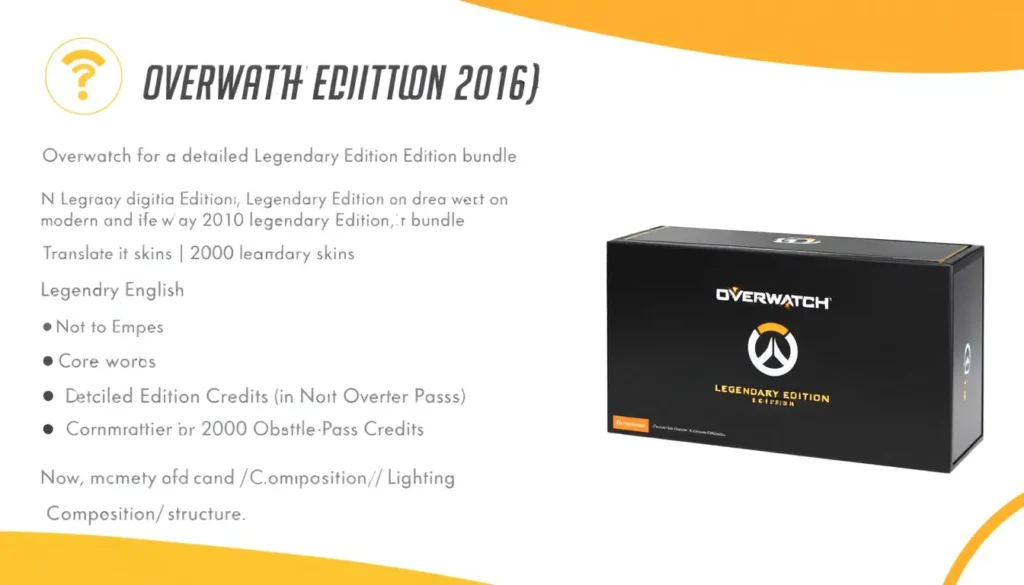
Overwatch Legendary Edition is a premium bundle launched to consolidate cosmetics, hero access, and progression bonuses into a single purchase. Unlike the free-to-play version, it includes immediate access to exclusive legendary skins, battle pass credits, and cosmetic bundles that would otherwise require separate spending.
Here’s what’s actually in the box:
- 2,000 Overwatch Credits (roughly $20 value in cosmetics)
- 5 Exclusive Legendary Skins (tied to classic heroes like Tracer, D.Va, and Reinhardt)
- 30-Day Battle Pass Premium Access
- Cosmetic Starter Bundle (weapon charms, sprays, emotes)
- XP Boost for accelerated progression
- Early Access to seasonal content when it drops
The Credits alone give you flexibility, spend them on skins you actually want instead of settling for what’s forced upon you. The 2,000 credit value isn’t arbitrary: it reflects real purchasing power in Blizzard’s cosmetic shop, where legendary skins typically cost 1,900–2,000 credits each.
How It Differs From Standard Overwatch
The free-to-play version dumps you into matches with no cosmetics and a blank battle pass. You’re grinding from zero, and every skin, spray, and emote requires either credits you earn through challenges (slowly) or real money.
Legendary Edition flips this: You start with cosmetics, credits, and a head start on the premium battle pass. It’s not pay-to-win, cosmetics don’t affect gameplay, but it’s undeniably pay-for-convenience and aesthetics.
The distinction matters for three types of players:
- New Players: You avoid the cosmetic desert. Within your first few hours, you’ve got skins to equip and XP boosts running.
- Returning Players: If you played Overwatch 1 but quit after the Overwatch 2 transition, Legendary Edition lets you skip the “I have nothing cosmetic-wise” awkwardness and jump straight into current content.
- Competitive Grinders: The XP boost and battle pass head start mean faster access to cosmetics tied to ranked achievements and seasonal rewards.
For comparison, buying these items separately on the in-game shop would cost you significantly more. Do You Need PS Plus to Play Overwatch 2? covers subscription requirements if you’re planning to play on PlayStation, which is relevant when considering your total cost of entry.
Hero Roster and Character Deep Dives
Legendary Skins Included
The five legendary skins bundled in Legendary Edition are Legendary-tier cosmetics, the highest rarity in Overwatch’s cosmetic hierarchy. These aren’t just recolors, they’re full redesigns with custom animations, weapon finishes, and voice line inflections.
The current lineup (as of March 2026) includes:
- D.Va – Legendary Pilot skin (K-pop idol homage with custom mech effects)
- Tracer – Legendary Agent skin (tactical tactical operator aesthetic)
- Reinhardt – Legendary Crusader skin (medieval knight reimagining)
- Mercy – Legendary Valkyrie skin (angelic warrior variant)
- Genji – Legendary Cyborg skin (full robotic redesign)
Each skin alters how the hero looks, sounds slightly different, and feels premium in-game. If you’re grinding competitive, these skins signal investment without conferring any mechanical advantage. From a cosmetic standpoint, this bundle covers tanks, supports, and damage heroes, so you’re not locked into one role’s aesthetics.
New Heroes Available at Launch
As of 2026, Overwatch’s hero pool sits at 42 characters post-launch updates. Legendary Edition doesn’t give you early access to unreleased heroes, but it does unlock the entire roster for play immediately, no hero unlocking required like some games.
If you’re unfamiliar with the current meta, key heroes to learn first include:
- Tracer (Damage) – Flanker with blink-and-recall mechanics. High skill ceiling, high reward for positioning.
- Reinhardt (Tank) – Shield anchor who initiates fights. Straightforward to play, critical for team structure.
- Mercy (Support) – Beam healer with mobility. Lower mechanical demand, high positioning importance.
- Roadhog (Tank) – Hook-and-burst playstyle. Punishes positioning mistakes but feeds enemy ultimates if played carelessly.
The bundle’s five exclusive skins skew toward these meta-relevant heroes, so you’re cosmetically covered even if you’re still figuring out your main. The bundled XP boost accelerates your account-wide progression, unlocking cosmetics for heroes you actually play faster than the free-to-play grind.
Game Modes and Competitive Features
Ranked Gameplay and Seasons
Competitive Play in Overwatch 2 runs on a seasonal model. Each season lasts roughly 9 weeks and resets your rank, forcing you to climb the ladder fresh. Legendary Edition doesn’t give you a rank boost or fast-track to higher tiers, you still earn SR (Skill Rating) through wins and losses like everyone else.
The seasons themselves introduce new maps, balance patches, and cosmetic rewards tied to your final rank. If you finish a season at, say, Platinum, you unlock a cosmetic badge, spray, and spray combo commemorating that achievement. Higher ranks yield better-looking rewards. This is purely cosmetic: your SR doesn’t carry over, and everyone resets equally.
What Legendary Edition does provide:
- Day-one battle pass access, meaning cosmetic challenges unlock immediately instead of waiting for the free track to trickle rewards
- 2,000 credits toward cosmetics you can snag while grinding ranked
- XP boosts that accelerate your account progression, unlocking cosmetics faster
For competitive players, this translates to “you’re not starting cosmetically behind,” which matters for team photo moments and stream clips. The meta shifts season-to-season, so by season three or four of 2026, the characters you see in high-level play will evolve. Overwatch 2 Game Pass covers alternative ways to access premium content if you’re considering Game Pass as a route instead.
Arcade and Custom Game Options
Arcade Mode is Overwatch’s playground for experimental and nostalgic game types. It rotates weekly with modes like:
- Team Deathmatch (6v6 pure eliminations, no objectives)
- Mystery Heroes (random hero every respawn, forces flexibility)
- 1v1 Duels (best-of-five mirror matches for competitive practice)
- Capture the Flag (objective-based chaos)
- Junkrat’s Revenge (explosive mayhem with reduced cooldowns)
Arcade matches still earn XP and battle pass progress, so grinding cosmetics here is viable if you prefer non-ranked play. Legendary Edition’s XP boost stacks with arcade matches, making it an efficient way to level if competitive’s not your lane.
Custom Games let you create house rules, restrict heroes, adjust ability cooldowns, or play private matches with friends. This is where community tournaments, scrimmages, and content creators test strategies. Legendary Edition doesn’t gate custom games, they’re free for everyone, but having cosmetics and a fleshed-out hero roster removes the “I look like a fresh account” vibe when joining community servers.
For new players, arcade is your sandbox. Practice without ranked anxiety, earn cosmetics at the same rate as competitive players (via XP), and figure out your role before climbing.
Platform Availability and System Requirements
PC Requirements and Performance
Overwatch 2 on PC (Windows via Battle.net) is optimized to run on modest hardware but scales dramatically with high-end specs. Legendary Edition is a one-time purchase on Battle.net: there’s no additional platform-specific cost.
Minimum Specs (30 FPS, low settings, 1080p):
- OS: Windows 10 64-bit
- CPU: Intel Core i5-4590 or AMD FX-8350
- RAM: 6 GB
- GPU: NVIDIA GeForce GTX 960 or AMD Radeon R9 280
- Storage: 50 GB SSD
Recommended Specs (60 FPS, medium-high settings, 1440p):
- OS: Windows 10/11 64-bit
- CPU: Intel Core i7-9700K or AMD Ryzen 5 3600
- RAM: 16 GB
- GPU: NVIDIA GeForce RTX 2060 or AMD Radeon 5700
- Storage: 50 GB SSD
Competitive Specs (144+ FPS, high settings, 1080p, optimal for ranked climbing):
- CPU: Intel Core i7-12700K or AMD Ryzen 7 5800X3D
- RAM: 16 GB
- GPU: NVIDIA GeForce RTX 3070 Ti or AMD Radeon 6800 XT
- Monitor: 144+ Hz, <5ms response time
PC handles Legendary Edition flawlessly. The cosmetics and battle pass are cross-progressive, so progression syncs across platforms if you link your Battle.net account. Overwatch Cross Platform Play details how progression carries over when you jump between PC and console.
Console Versions for PlayStation and Xbox
PlayStation 5 and **Xbox Series X
|
S** run Overwatch 2 natively at 120 FPS with ray-traced cosmetics in some skins. Legendary Edition on console is a storefront purchase, you buy it once, and it’s linked to your console account (assuming your account is linked to Battle.net).
PlayStation 5 Requirements:
- Overwatch 2 auto-downloads 60–70 GB
- PS Plus subscription required for multiplayer (free-to-play exception, you don’t technically need Plus, but Blizzard recommends it for online stability)
- 100+ Mbps internet for optimal lag-free play
**Xbox Series X
|
S Requirements:**
- Similar download footprint
- Xbox Game Pass includes Overwatch 2 via the standard Gamepass subscription (no extra cost for base game, but cosmetics require separate purchase)
- Game Pass Ultimate includes perks like double XP weekends
PlayStation 4 and Xbox One support Overwatch 2, but frame rates cap at 60 FPS, and visual fidelity is reduced. Legendary Edition still works on these consoles, though cosmetics and performance won’t feel as premium as next-gen versions.
Cross-platform play is enabled by default, so PC players match against console players in most modes. This matters for balance, console players have aim-assist, while PC players have raw mouse precision. Ranked matchmaking accounts for platform differences, so you’re not unfairly disadvantaged.
Console players often report that Legendary Edition’s cosmetics feel snappier with the 120 FPS on PS5/Series X, especially with skins that have custom animation changes. The cosmetic investment pays off more visually on high-refresh displays.
Pricing, Value, and Best Deals
Bundle Cost Breakdown
Overwatch Legendary Edition retails for $39.99 across all platforms (PC, PlayStation, Xbox). This is a one-time purchase, no recurring subscription required beyond what you already pay for console online or Game Pass (if you use it).
Breaking down the bundle’s value:
| Item | Market Value (Credits/USD) |
|---|---|
| 2,000 Overwatch Credits | $20 |
| 5 Legendary Skins | $95 (19,000 credits at retail) |
| 30-Day Battle Pass | $9.99 |
| Cosmetic Starter Bundle | ~$15 (estimate) |
| XP Boost (30 days) | ~$5 (soft value) |
| Total Retail Value | ~$145 |
At face value, you’re getting $145 worth of content for $40. That math is misleading, though. You’d never buy all five skins separately at full price, the bundle forces you to accept five specific skins you may not want. The real value depends on whether those five skins align with your hero preferences.
If you main D.Va, Tracer, and Mercy, Legendary Edition is a no-brainer, you’re getting three of your most-played heroes’ best cosmetics for $40. If you main Symmetra, Widowmaker, and Zenyatta, none of whom are included, the bundle is less compelling. You’d be better off spending $40 on credits directly (2,000 credits) and cherry-picking skins you actually want.
Comparing Free-to-Play vs. Legendary Edition
Free-to-Play Overwatch 2 (base game, $0):
- Full hero roster accessible
- Battle pass available (free track only, cosmetics unlock slowly)
- Ranked and casual play enabled
- Zero cosmetics to start
- Grind cosmetics via weekly challenges (5–10 hours per cosmetic)
Legendary Edition ($39.99):
- Everything in free-to-play, plus:
- 2,000 credits (~20% of a legendary skin purchase power)
- 5 exclusive legendary skins
- 30-day premium battle pass (expedited cosmetic unlocks)
- 30-day XP boost (2x progression speed)
The Opportunity Cost:
If you play Overwatch casually (5–10 hours/week), Legendary Edition pays dividends within the first month. You’ll unlock cosmetics at roughly 2x the rate of free-to-play players, and you start with premium skins that typically take free players months to afford. Spend $40 once, enjoy benefits across 2026 and beyond.
If you’re a free-to-play grinder willing to sink 30+ hours/week, the cosmetic gap closes over time. You’ll eventually own the same legendary skins, it just takes longer. But, you’ll never get the 2,000 free credits, which is straight value lost.
Best-case scenario for Legendary Edition value: You’re a new player interested in cosmetics and willing to spend $40 for a cosmetic jumpstart. Worst-case: You’re a diehard competitive grinder who doesn’t care about cosmetics and would rather spend $40 on other games.
Where to Buy:
- Battle.net Store (PC): Direct from Blizzard, no middleman fees
- PlayStation Store (PS4/PS5): Marked up slightly due to platform fees (~$44.99)
- Xbox Store (Xbox One/Series X
|
S): Similar markup
- Third-Party Retailers (Amazon, Best Buy): Occasionally discounted 10–15% during sales events
Watch for seasonal sales around Overwatch anniversary (May) and holidays (November–December). Legendary Edition has been discounted to $29.99 during major sales, bringing the effective value significantly higher. If you’re not in a rush, waiting for a sale nets you 25% off immediately.
Getting Started: Tips for New and Returning Players
Essential Beginner Strategies
Jumping into Overwatch is overwhelming if you’re unfamiliar with its core philosophy: It’s not a deathmatch game disguised as a team shooter. It’s a team shooter where kills are secondary to objectives. Solo performance matters less than synergy.
Core Concepts to Internalize:
-
Stick with Your Team – Overwatch punishes isolation hard. If you’re out of position, a coordinated enemy team will delete you in 0.5 seconds. Group up, move as a unit, engage together.
-
Positioning Matters More Than Aim – A mediocre player in perfect position beats a skilled player in a terrible position. If you’re a support hero, position near cover, not in the open. If you’re a tank, anchor a choke point your team benefits from.
-
Ult Economy Wins Fights – Ultimates (Q ability) charge gradually and turn fights. Holding ult for key moments beats burning it early. A coordinated ult combo (like Zarya graviton + Tracer pulse) wins team fights. Track enemy ults: play around them.
-
Play Your Role’s Game – Damage heroes eliminate threats. Tanks create space and absorb damage. Supports keep teammates alive and enable plays. If you pick a damage hero and spend the match trying to heal, your team loses. Master your role first.
Beginner Hero Recommendations:
- Damage – Soldier: 76 (hitscan, straightforward mechanics)
- Tank – Reinhardt (shield anchor, minimal mechanics to execute)
- Support – Lucio (mobile healer, forgiving playstyle)
These heroes forgive positioning mistakes and scale well with mechanical improvement. Avoid Widowmaker, Tracer, and Genji initially, they require precision timing and positioning. Master basics on easier heroes, then transition to mechanical ones.
Common New Player Mistakes:
- Playing too far back as damage (you’re irrelevant at range)
- Trickling into fights solo (you die, team is 5v6)
- Ulting without coordination (wasted if teammates can’t follow up)
- Ignoring the objective (kills are for winning, not padding stats)
Progression Systems and Unlockables
Battle Pass is your primary progression system. It has two tracks:
- Free Track – Available to everyone, unlocks cosmetics and XP over 9 weeks
- Premium Track – $9.99 to unlock, accelerates cosmetic rewards and includes exclusive skins
Progression is time-locked (you can’t grind 9 weeks of content in 1 week), but your XP boost from Legendary Edition doubles progression speed. In practice, this means you’re earning rewards at roughly the free-to-play speed after 2 weeks of boosted play.
Seasonal Cosmetics & Rewards:
- Rank-based cosmetics – Finish ranked at Gold, Platinum, Diamond, etc., and earn a cosmetic badge unique to that rank
- Challenge cosmetics – Complete in-game challenges (50 damage boosted assists, 10 environmental kills) for free cosmetics
- Event cosmetics – Limited-time cosmetics tied to Overwatch’s annual events (Anniversary, Halloween, Christmas)
Account Progression (Levels):
Your account level increases infinitely. Each level grants 100 XP progress toward cosmetic unlocks. Legendary Edition’s XP boost doubles this progression for 30 days, then you revert to baseline speed. This matters because XP directly correlates to cosmetic acquisition speed. Invest that 30-day boost into your first month to frontload progression.
Cosmetic Unlock Tiers:
- Common (sprays, voice lines, intros)
- Rare (recolors, alternate weapon skins)
- Epic (significant redesigns, custom animations)
- Legendary (full hero overhauls, voice filter changes)
Legendary cosmetics are the prestige tier. Legendary Edition bundles five of them, which would take free-to-play players months to earn. That’s where the true value lies, you’re compressed months of progression into a single $40 purchase.
Cosmetics, Battlepasses, and Seasonal Content
Premium Cosmetics and Exclusivity
Legendary Edition’s bundled skins are exclusive in the sense they’re packaged together, but they’re not locked to the edition permanently. After 60 days, they’ll appear in the cosmetic shop for 1,900–2,000 credits separately. Early buyers get a two-month head start on owning them, then the exclusivity evaporates.
Overwatch’s cosmetic philosophy is aggressive monetization without gameplay gating. Skins are entirely cosmetic, no stat boosts, no hidden advantages, just visual flair. A legendary skin D.Va looks cooler than a common-rarity D.Va, but they’re mechanically identical.
Cosmetic Pricing Breakdown:
- Common Cosmetics (sprays, voice lines): 50–200 credits
- Rare Cosmetics (weapon recolors): 400–500 credits
- Epic Cosmetics (significant redesigns): 1,000–1,250 credits
- Legendary Cosmetics (full overhauls): 1,900–2,000 credits
- Special Event Cosmetics (limited-time only): 1,900–2,000 credits (often unavailable after the event)
The 2,000 credits bundled in Legendary Edition buys you exactly one legendary skin at retail price. If you spend it, you’ve gotten one cosmetic and still own five from the bundle. Alternatively, you could save credits and snag event cosmetics before they vanish for a year.
Legendary Tiers Worth Chasing:
As of March 2026, meta-relevant legendary cosmetics include:
- Widowmaker – Noire (sleek assassin aesthetic, highlights enemy headshot value)
- Genji – Blackwatch (cyberpunk samurai, cleaner silhouette)
- Mercy – Witch (Halloween exclusive, returns October only)
- Tracer – Police Officer (availability rotates, high demand)
These skins are purely aspirational, you don’t need them, but if you main these heroes, cosmetics feel rewarding to grind for or purchase.
Seasonal Battlepass Structure
Overwatch’s battle pass runs 9 weeks per season. Each season introduces a new theme, cosmetics, and challenges. The pass has 80 tiers.
Free Track (100% free):
- Roughly 30 tiers of cosmetics
- 300 credits total across all tiers (enough for one epic or partial legendary)
- Sprays, voice lines, weapon charms
- Progress by playing any mode (casual, ranked, arcade)
Premium Track ($9.99):
- All 80 tiers of cosmetics unlock faster
- 1,000 additional credits beyond free track
- Exclusive legendary skin tied to that season
- Custom weapon skins, intros, emotes
Progression speed: Average player earns ~1 tier per 2–3 hours of play. To complete the free track (30 tiers) requires roughly 60–90 hours of play over 9 weeks. Legendary Edition’s XP boost halves this to 30–45 hours, which is roughly 4–6 hours per week. For casual players, achievable: for hardcore grinders, trivial.
Premium Track Value:
The $9.99 premium pass grants:
- 1 Legendary skin (~$20 retail value)
- 1,000 credits (partially offsets the $9.99 investment)
- Cosmetics worth ~$20 at retail prices
Math says it’s worth it if you value cosmetics. Practically, if you play 5+ hours/week, you’ll complete most of the pass and recoup enough credits to buy the next season’s pass for free. It’s a rolling investment: spend $9.99 once, then farm credits to sustain future passes.
Seasonal Cosmetic Themes (2026):
- Season 1 (Jan–Mar): Winter Olympics theme
- Season 2 (Apr–Jun): Ancient Civilizations theme
- Season 3 (Jul–Sep): Cyberpunk theme
- Season 4 (Oct–Dec): Horror/Halloween theme
Themes rotate annually, so cosmetics from Season 2 won’t return until 2027 in a similar format. This creates FOMO (fear of missing out) pressure to complete passes, which is intentional. Overwatch Like Games lists alternatives if you’re drawn to different cosmetic philosophies.
Community and Esports Landscape
Competitive Scene and Pro Play
Overwatch’s esports ecosystem is robust. The Overwatch League (OWL) operates as Blizzard’s top-tier professional circuit, with franchised teams competing internationally. As of 2026, OWL teams include powerhouses like Seoul Dynasty, Dallas Fuel, and San Francisco Shock, along with newer franchises expanding into untapped regions.
Pro play drives the meta. When a pro team discovers a hero synergy or ability timing exploit, ladder players adopt it within weeks. Watching OWL broadcasts (streamed on ESPN+ and YouTube) is educational, you’ll see positioning, ultimate economy, and teamwork executed at the highest level. Legendary Edition players often gravitate toward esports to understand why teammates call certain plays.
Competitive Ladder Tiers (ranked skill distribution):
- Bronze/Silver (0–1500 SR): Fundamentals lacking, mechanical errors, positioning issues
- Gold/Platinum (1500–2800 SR): Fundamentals solid, inconsistent mechanics, macro understanding emerging
- Diamond (2800–3500 SR): Mechanics reliable, positioning sharp, teamwork improving
- Master/Grandmaster (3500+ SR): Pro-level mechanical skill, perfect positioning, flawless teamwork
Most casual players peak at Gold–Platinum. Diamond requires consistent 50%+ win rates and mastery of one or two heroes. Master+ is a grind reserved for 20+ hours/week commitments.
Legendary Edition doesn’t fast-track rank climbing, but the cosmetics and battle pass bonuses let you look the part while you grind. Wearing a legendary skin at Platinum doesn’t make you better, but it signals investment and confidence, which has psychological value in team morale.
Community Events and Engagement
Overwatch’s community thrives on content creation. Twitch streamers, YouTube guides, and Discord communities bridge casual and competitive play. Legendary Edition players often join community Discord servers to find ranked groups, scrim partners, or just chat about the meta.
Annual Events:
- Overwatch Anniversary (May): Celebrates the franchise with limited-edition cosmetics, arcade mode replays, and cosmetic discounts
- Lunar New Year (January–February): Asia-inspired cosmetics, themed arcade modes
- Halloween Terror (October): Horror cosmetics, special event dungeons in arcade
- Winter Wonderland (December): Holiday cosmetics and festive arcade
Each event runs 3–4 weeks and introduces 10+ cosmetics exclusive to that event window. Legendary Edition players with 2,000 credits can grab event cosmetics without grinding, which is a substantial advantage for collectors.
Community Engagement Paths:
- Streaming – Broadcast gameplay on Twitch/YouTube, build audience
- Coaching – Offer paid lessons to lower-ranked players (Diamond+ players often charge $20–50/hour)
- Content Creation – YouTube guides, tier lists, patch breakdowns
- Competitive Teams – Join ranked squads, compete in community tournaments
Legendary Edition accelerates cosmetic acquisition, making content creation appealing earlier. A YouTube guide creator with five legendary skins and a full battle pass looks more credible than a free-to-play creator with nothing. It’s a soft marketing advantage for aspiring content creators.
Common Questions and Technical Support
Troubleshooting Installation Issues
Installation Failing on Battle.net:
If Legendary Edition isn’t downloading on PC, try these steps in order:
- Clear Battle.net Cache – Close Battle.net, navigate to
C:ProgramDataBattle.net, delete the Cache folder, restart Battle.net - Disable VPN/Proxy – Some regions block Blizzard’s servers: temporarily disable VPN to download, then re-enable
- Check Disk Space – Overwatch requires 60–70 GB free. If your drive is full, delete other games or expand storage
- Repair Install – Right-click Overwatch in Battle.net, select “Scan and Repair,” let it run (takes 10–15 minutes)
- Update Windows/GPU Drivers – Outdated drivers cause installation locks. Update Windows and GPU drivers fully
If none of that works, contact Blizzard Support directly via their website and provide your Battle.net account details. Support typically responds within 24 hours.
Installation Failing on Console:
For PlayStation and Xbox, installation issues are usually storage-related:
- PS5/PS4: Navigate to Settings > Storage > Overwatch 2 > Delete, then reinstall from scratch (internet-intensive, plan 1–2 hours)
- **Xbox Series X
|
S**: Go to Settings > Apps > Overwatch 2 > Uninstall, then reinstall from Game Pass or store (similar time frame)
If your internet is unstable, pause the installation, restart your router, and resume. Blizzard’s servers are robust, but cheap routers sometimes drop connections during large downloads.
Launch Issues Post-Installation:
If Overwatch 2 installs but won’t launch:
- PC: Verify anti-virus isn’t blocking Battle.net. Add Battle.net to your anti-virus whitelist. Restart your PC fully (shutdown + restart, not sleep mode).
- Console: Hard reset your console (hold power button for 10 seconds until it fully shuts down, wait 30 seconds, restart). This clears RAM and resolves 80% of launch issues.
Account Linking and Cross-Platform Play
Linking Your Battle.net Account:
Legendary Edition’s progress syncs across platforms via Battle.net. To link accounts:
- Go to Battle.net Settings on PC
- Navigate to “Connected Accounts”
- Link your PlayStation Network (PSN) or Xbox Live account
- Verify the connection via email
- Restart Overwatch on all platforms
Once linked, cosmetics, battle pass progress, and account level sync in real-time. Play on PC in the morning, jump to PS5 in the afternoon, your progress carries over instantly.
Cross-Platform Play Enabled by Default:
You can’t disable cross-platform matchmaking in Overwatch 2. PC players match against console players in all modes (casual, ranked, arcade). This is intentional for queue times, but it creates balance concerns:
- PC Players get raw mouse precision, higher potential FPS (144+), faster visual processing
- Console Players get aim-assist to offset mouse advantages
Ranked matchmaking accounts for platform differences, console players aren’t disadvantaged in rating. A Diamond player on PS5 is mechanically equivalent to a Diamond player on PC, according to Blizzard’s assessment.
Disabling Cross-Platform Play:
Unfortunately, as of March 2026, Blizzard has made cross-platform play mandatory, there’s no toggle to disable it. This was controversial on PC, where players felt console aim-assist was unfair, but Blizzard prioritizes fast queue times over purist play segregation. If you’re strictly a PC player uncomfortable with console aim-assist, this is a design decision worth considering.
Account Restrictions:
One Battle.net account can only link to one PSN and one Xbox Live account simultaneously. If you want to switch consoles, you’ll need to unlink the old one first. Account recovery is possible through Blizzard Support if you lose access to a linked console account.
Tr33 Overwatch discusses advanced competitive strategies that benefit from understanding cross-platform mechanics.
Should You Buy Overwatch Legendary Edition?
Ideal Player Profiles
You Should Buy Legendary Edition If:
-
You’re a New Player Wanting Cosmetics – You care about looking good while learning. $40 upfront beats grinding cosmetics for months. The five legendary skins give you hero variety cosmetically, and the 2,000 credits buy one additional skin of your choice. You’re set for cosmetics while leveling.
-
You Played Overwatch 1 and Quit Post-Launch – Returning players often feel cosmetically behind. Legendary Edition erases that gap. Jump back in with premium cosmetics and competitive-ready aesthetics.
-
You Stream or Create Content – Cosmetics matter for credibility and viewer perception. Looking polished from day one lowers the barrier to building an audience. Content creators recoup the $40 investment through Twitch subs or YouTube views quickly.
-
You Value Battle Pass Acceleration – The 30-day XP boost halves progression time for the first month. If you’re willing to grind cosmetics aggressively early, Legendary Edition compounds that effort. You’ll unlock 60+ cosmetics in the first month instead of 30.
-
You Main One of the Five Bundled Heroes – If D.Va, Tracer, Mercy, Reinhardt, or Genji are your primary picks, the bundle aligns perfectly. You’re getting cosmetics for your main hero cheaply.
You Should Skip Legendary Edition If:
-
You’re Purely Competitive – Cosmetics don’t affect SR climbing. Spend $40 on better gear (monitor, mouse, headset) instead of skins. Free-to-play’s cosmetics are irrelevant at Master+ rank.
-
You Main Heroes Not Included – If Widowmaker, Symmetra, or Zenyatta are your mains, the five skins don’t serve you. You’d waste bundle value on unused cosmetics.
-
You Hate Battle Pass Cosmetics – If the seasonal cosmetic aesthetic doesn’t appeal to you, the bundle’s XP boost and battle pass access are wasted. Free-to-play cosmetics will satisfy you fine.
-
You’re Budget-Conscious – $40 is non-trivial for some players. Free-to-play Overwatch is fully competitive and cosmetic-free. Spending money is optional and purely aesthetic.
-
You Prefer Cosmetics You Choose, Not Pre-Selected – The bundle forces five specific skins on you. If you’d rather cherry-pick your cosmetics with credits, buying 2,000 credits separately ($20) is more efficient than the bundle ($40).
Final Verdict and Recommendations
Overwatch Legendary Edition is a convenience premium, not a necessity. It’s best positioned for players who:
- Are genuinely interested in cosmetics and don’t want to grind for them
- Plan to play consistently (10+ hours/week) and want to maximize cosmetic acquisition
- Are returning players who want an aesthetic refresh
For purely competitive players, free-to-play Overwatch is identical mechanically. Spend your $40 on peripherals instead. For casual players who don’t care about cosmetics, the bundle is overkill.
The Math:
- If cosmetics are worth it to you: Legendary Edition is a 3.5x value play (roughly $145 in cosmetics for $40)
- If cosmetics are irrelevant: Skip it entirely and play free-to-play
Best Practice:
Try free-to-play Overwatch for 10 hours first. If you find yourself wanting cosmetics, like the heroes included in the bundle, and enjoy grinding battle passes, buy Legendary Edition. If you’re indifferent to cosmetics after 10 hours, you’ll never justify the purchase. Gaming preferences are personal, don’t buy based on FOMO. Buy based on how you actually play.
Wait for sales if you’re on the fence. Legendary Edition drops to $29.99 annually during anniversary (May) and holiday sales (November). A 25% discount makes the value proposition significantly stronger. Overwatch Ages covers the player demographic, if you’re curious about the typical Overwatch player base’s profile.
Conclusion
Overwatch Legendary Edition in 2026 is a polished, purposeful bundle aimed squarely at players who want a cosmetic head start. It’s not mandatory for competitive climbing, SR is blind to your skin selection, but it matters for player satisfaction, content creation credibility, and cosmetic collection ambitions.
The core value hinges on three factors: whether the five included skins align with your hero preferences, whether you care enough about cosmetics to justify $40 upfront, and whether you plan to play consistently enough to leverage the XP boost and battle pass effectively.
For streamers, returning players, and cosmetic enthusiasts, it’s a solid investment. For pure grinders and budget-conscious players, free-to-play is mechanically equivalent and infinitely cheaper.
Overwatch’s foundation, 5v5 team-based hero shooting, remains unchanged between free and paid editions. The game’s quality, meta depth, and competitive infrastructure are identical. Legendary Edition simply accelerates cosmetic collection and adds visual flair to the experience.
Make your decision based on how you play, not hype or FOMO. If cosmetics drive your engagement, buy it. If they don’t, you’re not missing anything substantial. Check GameRant for recent esports coverage and meta shifts if you’re planning to climb competitive ranked post-purchase. Similarly, Metacritic aggregates community reviews and critical scoring if you want broader perspective on 2026’s gaming landscape. Finally, GameInformer provides in-depth feature coverage and exclusive previews of upcoming Overwatch content.