


Table of Contents
ToggleIf you’ve been following Overwatch esports, you’ve probably heard whispers about the Overwatch Stadium, the epicenter of competitive play where the world’s best teams clash in high-stakes tournaments. But what exactly is this facility, and why should it matter to you? Whether you’re a die-hard esports fan, a aspiring pro player, or just someone curious about the infrastructure behind competitive gaming, understanding the Overwatch Stadium is key to appreciating the competitive landscape of 2026. This guide breaks down everything from the venue’s history and cutting-edge technology to how you can actually attend events and what the future holds for professional Overwatch. Let’s immerse.
Key Takeaways
- The Overwatch Stadium is a dedicated esports facility featuring state-of-the-art gaming hardware, professional broadcasting infrastructure, and capacity for thousands of fans, serving as the epicenter of competitive Overwatch 2 play.
- Overwatch Stadium hosts official league matches, World Cup qualifiers, grand finals events, and tier-2 tournaments, with franchised teams earning guaranteed spots through significant investment while other teams qualify through seasonal tournaments.
- The stadium’s competitive infrastructure—including 240+ FPS gaming rigs, 360Hz monitors, ultra-low-latency networking, and redundancy systems—ensures consistency and eliminates hardware-based advantages that plagued earlier online tournaments.
- Live Overwatch Stadium events are accessible to fans through flexible pricing ($20–$100+ depending on seating and event tier), with the experience enriched by large displays, sound systems, and community atmosphere that rival traditional sports arenas.
- Emerging technologies like VR spectating, AI-driven real-time analysis, and expansion plans for regional satellite facilities signal the continued evolution of esports infrastructure and the growing legitimacy of competitive Overwatch.
What Is Overwatch Stadium?
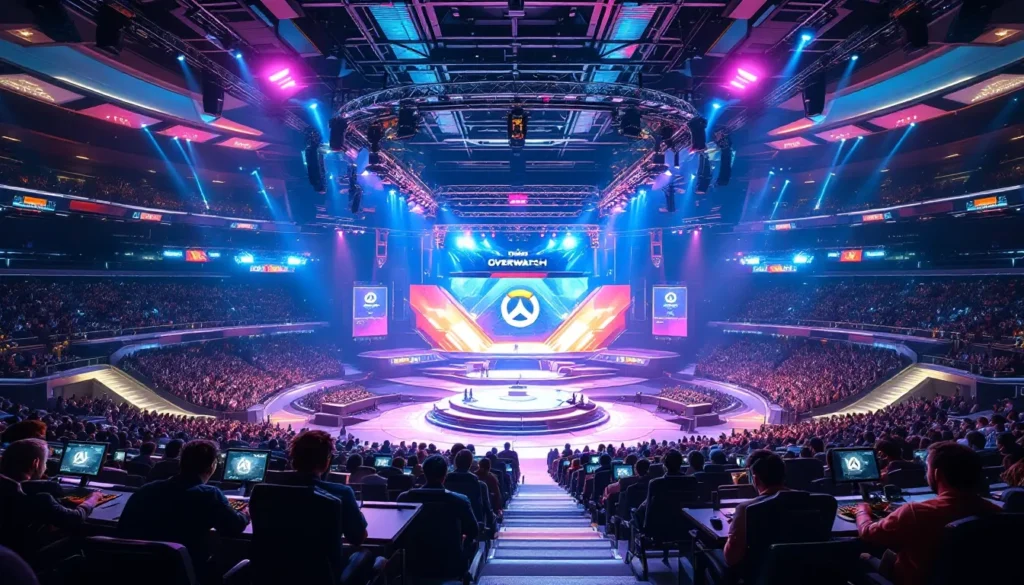
The Overwatch Stadium is a dedicated esports facility built specifically for hosting competitive Overwatch 2 tournaments, league matches, and events. It’s not just a building, it’s a complete infrastructure designed to support professional gaming at the highest level, complete with optimized hardware, broadcasting facilities, and crowd capacity for thousands of fans.
Think of it as the esports equivalent of a traditional sports arena, except instead of watching athletes on a physical field, spectators gather to watch teams compete in real-time across the digital battlegrounds of Overwatch. The facility combines top-tier gaming rigs with professional broadcasting equipment, allowing millions of viewers worldwide to tune in while live audiences experience the action firsthand.
The stadium serves multiple purposes: it’s a venue for official league matches, a tournament host, a training ground for teams, and a pilgrimage site for fans. For competitive players, getting access to the stadium environment, and the talent that congregates there, represents a significant milestone in their esports careers.
History and Evolution of Overwatch Esports Venues
The Rise of Dedicated Esports Facilities
Overwatch esports didn’t always have permanent homes. In the early days (2016-2018), the Overwatch League operated out of various rental venues, traditional esports arenas, convention centers, and even improvised setups in partnership with gaming studios. This approach worked for a time, but it created inconsistency: different venues meant different networking capabilities, hardware configurations, and fan experiences.
The push for a dedicated Overwatch Stadium emerged from a simple observation: esports was growing too fast and too professionally to keep operating out of borrowed spaces. Teams, players, and fans deserved stability. By 2020, discussions about building a permanent home for competitive Overwatch became more serious. The pandemic accelerated online tournaments, but it also highlighted what fans were missing, the visceral energy of live competition.
By the mid-2020s, major publishers and esports organizations recognized that infrastructure investment was essential for legitimacy. Overwatch Stadium became one of the flagship examples of this shift, joining the ranks of other permanent esports facilities like the League of Legends facilities in various regions.
Key Tournaments Hosted at Overwatch Stadium
The Overwatch Stadium has become the primary home for several major tournaments and league matches:
Overwatch League Regular Season & Playoffs – The bulk of OWL matches are now staged at the stadium, providing teams with consistent, predictable competition environments across the season.
Overwatch World Cup Qualifiers – International tournaments that determine which teams represent their regions on the world stage happen here regularly.
Grand Finals Events – The most prestigious tournaments culminate at the stadium, attracting the biggest crowds and viewership numbers.
Tier-2 and Tier-3 Tournaments – Beyond official league play, numerous grassroots and developmental tournaments use the facility, supporting the competitive pipeline.
Access to these tournament experiences has shaped how players develop competitively. Teams that train at the stadium benefit from consistent ping, standardized hardware, and proximity to the professional scene. This infrastructure advantage is real, it’s why top teams often practice there even when not competing.
Overwatch Stadium Architecture and Technology
State-of-the-Art Gaming Rigs and Hardware
Competitive Overwatch demands precision. Competitive Overwatch demands precision, and that requires hardware that can deliver consistent performance under tournament pressure. The stadium’s gaming stations feature top-tier components:
CPUs & GPUs – Each rig typically runs high-end Intel or AMD processors paired with NVIDIA RTX 4090 or better graphics cards, ensuring 240+ FPS stability at 1440p resolution. This is critical, at the pro level, framerate consistency matters as much as average FPS.
Monitors – 360Hz OLED or high-refresh-rate displays with minimal input lag. Teams practice and compete on the same specifications, eliminating hardware-based excuses.
Peripherals – Standardized mice, keyboards, and headsets from sponsors. Notably, professional players often have their preferred peripherals, and the stadium accommodates these within reasonable bounds.
Networking – Ultra-low-latency dedicated connections ensure all competitors experience identical server-side timing. This eliminates the “home server advantage” problem that plagued earlier online tournaments.
The stadium also maintains redundancy systems, backup rigs, failover networking, and power backups that guarantee tournaments can proceed even if primary systems fail. This reliability is non-negotiable at the professional level.
Broadcasting Infrastructure and Fan Experience
What spectators see on screen at home involves far more than just pointing cameras at the players. The stadium features multiple camera angles, instant replay systems, and live replay analysis equipment that rivals traditional sports broadcasts.
Production Suite – Banks of displays showing team POVs, map overviews, team coms analysis, and real-time stat feeds. Directors can cut between perspectives seamlessly, creating the dynamic viewing experience fans expect.
Crowd Experience – The physical stadium incorporates large displays, sound systems, and interactive elements. When a team pulls off a clutch teamfight, the crowd feels it. This creates the atmosphere that makes esports compelling beyond just the gameplay.
Streaming Infrastructure – Redundant streaming to Twitch, YouTube, and other platforms ensures millions can watch simultaneously. The stadium’s bandwidth and encoder setup can handle multi-bitrate streams for global audiences with varying connection speeds.
The fan experience is deliberately engineered. Comfortable seating, sightlines to the main displays, merchandise stands, and food service turn stadium events into full experiences rather than just watching someone play a game. This professionalization of the fan experience directly contributes to esports legitimacy and audience growth.
Competitive League Structure and Team Participation
How Teams Qualify and Compete
Access to the Overwatch Stadium and official league play isn’t free-for-all. Teams must qualify through one of several pathways:
Franchised League Slots – The most direct path. Franchised Overwatch League teams earn guaranteed spots in regular season and playoff matches at the stadium. These teams pay significant fees for their slots (in the millions), which funds the infrastructure you’re reading about.
Seasonal Qualifiers – Open tournaments where any team can compete for remaining spots, circuit points, and prize pools. These qualifiers determine which non-franchised teams get stadium access for tournaments.
Regional Leagues – Tier-2 competitions feed talent into the main league. Teams that dominate regional scenes earn invitations to larger tournaments.
Invite-Only Events – The stadium occasionally hosts invitationals that bring together the best teams globally, regardless of their league standing.
Once qualified, teams compete in a round-robin format during regular seasons, with playoffs determining championship contenders. The match structure is best-of-five (BO5) for most competitive formats, teams play across five different maps and control points, and the first team to win three maps wins the match. This format rewards flexibility and map pool depth, preventing one-trick-pony strategies.
Notable Teams and Players at the Stadium
The Overwatch Stadium hosts teams from around the globe. As of 2026, franchised teams represent regions across North America, Europe, Asia-Pacific, and other regions. These aren’t random rosters, they’re composed of some of the most mechanically skilled and strategically intelligent players in the world.
Team Compositions – Overwatch requires highly specialized roles: Main Tank (like Sigma or Reinhardt specialists), Off-Tank (Zarya or D.Va mains), Supports (positioned into Main Support and Flex Support), and Damage (split across Hitscan and Projectile specialists). Teams invest heavily in finding players with exceptional mechanics in their roles and proven teamfighting chemistry.
Topics like Overwatch Archives – Riftwhiz cover updates about league standings, player acquisitions, and roster changes that directly impact who you’ll see at the stadium.
Star Players – Names like Pine (on his best days), Fleta, and Decay have earned legendary status through stadium performances. These aren’t just mechanically gifted: they perform under pressure, their decision-making sharpens in high-stakes moments, and they elevate their teammates’ play.
The competitive caliber at the stadium is genuinely elite. Watching Overwatch at the professional level reveals the game’s depth in ways that ladder play never can. Positioning, ultimate economy, ult tracking, and team coordination reach levels that casual players may not even realize exist.
Attending Overwatch Stadium Events: What You Need to Know
Ticket Information and Venue Access
Attending live matches at the Overwatch Stadium is genuinely worth it, but logistics matter.
Ticket Pricing – Varies by event. Regular season matches typically range from $20–$60 depending on seating and demand. Playoff and championship events command premium prices, sometimes exceeding $100 for premium seats. Flash sales and season passes often provide discounts for committed fans.
Seat Selection – Premium seating near the stage or with optimal sightlines costs more, but honestly? The stadium’s large displays mean you can follow the action from nearly anywhere. Budget seats offer tremendous value if you’re just soaking in the atmosphere.
Purchase Methods – Tickets are typically sold through the official Overwatch esports website, Ticketmaster, or partner platforms. Sign up for newsletters to catch early-bird pricing.
Venue Access – Arrive early. The stadium implements standard security screening, bag checks, and ID verification. Prohibited items typically include outside food/beverages, professional cameras, and weapons (obviously). Bring your phone, though, capturing moments and posting to social media is encouraged.
Parking & Transportation – Most modern esports stadiums are situated near public transit. Check the venue’s official site for parking info, shuttle services, or metro directions. Game days attract crowds, so plan extra time for travel.
Best Practices for First-Time Spectators
If you’re attending your first live Overwatch event, here’s what separates an okay experience from an unforgettable one:
Arrive Early – At least 30-45 minutes before matches start. This gives you time to find your seat, grab food, and soak in pre-match hype videos and music. The vibe before matches is genuinely electric.
Understand the Meta – Knowing which heroes are strong in the current patch and which team compositions are trending makes live matches infinitely more interesting. You’ll appreciate decision-making and counter-picks rather than just watching flashy plays. Competitive resources like Dexerto’s esports coverage often break down meta shifts around major tournaments.
Learn Your Teams – Familiarity breeds investment. Watch a few matches online beforehand. Pick a team to root for, learn a few player names and their roles. You’ll notice nuances in play that strangers won’t catch.
Bring Cash – Concessions are convenient but often don’t accept card-only. Stadium food is expensive (it always is), so budget accordingly. Bottled water is cheaper than what they’ll charge for drinks.
Engage With the Community – Esports fans are generally welcoming. Don’t hesitate to chat with folks around you about plays, predictions, or why that tank swap was genius. The community makes the experience.
Manage Your Expectations on Downtime – Matches between technical pauses, breaks, and analyst segments can stretch events longer than viewing them online. Bring a book or be comfortable with just soaking in the stadium energy during downtime.
The Future of Overwatch Esports and Stadium Innovation
Emerging Technologies and Player Development
The Overwatch Stadium of 2026 is already forward-thinking, but the next phase of evolution is coming.
VR and Spectator Tech – Early experiments with VR viewing allow remote fans to “sit” in the stadium virtually, choosing their own camera angles in real-time. It’s not mainstream yet, but it’s on the roadmap. Imagine watching from a virtual courtside seat from your living room.
AI Analysis and Real-Time Insights – Machine learning models are being trained to analyze pro matches and provide real-time commentary on win conditions, positioning mistakes, and ult economy. This enriches both casual and hardcore viewing. Systems integrated with broadcast feeds already provide instant replay analysis of key teamfights.
Enhanced Player Development Programs – The stadium is becoming a training hub, not just a competition venue. Coaching clinics, scrimmage facilities, and mentorship from pros create a developmental pipeline. Young players who attend tournaments often stay to scrim against other aspiring pros, accelerating their growth.
Hardware Innovation – 480Hz monitors are being tested. Latency is dropping further below 1ms. While competitive advantages from hardware improvements plateau at the pro level, these investments signal serious commitment to the esports infrastructure.
Expansion Plans and Community Growth
Overwatch Stadium success has inspired expansion:
Regional Satellites – Discussions are underway about establishing satellite venues in other regions (Europe, Asia-Pacific, South America) that mirror the original facility. This reduces travel burdens for international teams and grows the ecosystem.
Youth Academy Partnerships – The stadium is partnering with gaming schools and college esports programs to identify and develop talent earlier. Think of it like esports’ version of minor leagues in traditional sports.
Content Creation Space – Dedicated streaming and content creation studios within the stadium allow players to produce guides, VOD reviews, and tutorials. This crossover between competitive play and content creation strengthens community engagement. Resources like The Loadout’s competitive guides show how pro insights drive grassroots learning.
Community Tournaments – Monthly open tournaments held at satellite facilities or online (with finals at the main stadium) give aspiring pros realistic pathways to professional play. This democratizes access to the competitive scene.
The broader trend is clear: esports infrastructure is maturing. The Overwatch Stadium is no longer a novelty, it’s the foundation of a legitimate competitive ecosystem. That legitimacy attracts sponsorship, media coverage, and player investment, which in turn attracts more fans and creates a virtuous cycle.
For grassroots players, this matters. The skill ceiling is being raised. The information and resources available to improving players have never been better. Whether you’re grinding ranked ladder or dreaming of stadium appearances, the infrastructure is there to support ambition.
Conclusion
The Overwatch Stadium represents more than just a building or a venue. It’s a symbol of esports maturity, proof that competitive gaming has legitimacy, infrastructure, and staying power. From its state-of-the-art hardware and broadcasting capabilities to its role in developing tomorrow’s pro players, the stadium anchors the entire Overwatch competitive ecosystem.
Whether you’re attending your first live event, following your favorite team’s playoff run, or grinding ranked hoping for your own stadium moment, understanding what the Overwatch Stadium is and how it operates deepens your appreciation for the scene. The competitive landscape of 2026 is shaped by this infrastructure, and it’s only going to grow from here.
The convergence of professional esports, cutting-edge technology, and passionate community that defines the Overwatch Stadium proves one thing: gaming is no longer niche. It’s a legitimate, thriving competitive domain with the venues, resources, and talent to match. And that’s worth celebrating. If competitive gaming interests you, there’s no better time to engage with it. The Overwatch competitive community is waiting for you, whether as a spectator, a player, or just someone who appreciates excellence at its finest.